Catching Problems Early, When They Are Easiest to Treat
No one wants to think about oral cancer, but it is far more treatable when it is found early. Its first signs are often painless and easy to miss. At Joshua Stern D.D.S in Nutley, NJ , we include a careful oral cancer screening in your regular dental visits. The exam takes only a few minutes and could make a lasting difference in your health.
Why Oral Cancer Screenings Matter
Oral cancer can develop on the lips, tongue, cheeks, gums, floor of the mouth, roof of the mouth, and the back of the throat. In its early stages, it often causes no pain. Many people don't notice anything until the disease has advanced. A routine screening gives your dentist a chance to spot unusual tissue changes long before they cause symptoms. That is when treatment options are widest and outcomes are best.
Because we already examine your mouth at every checkup, a screening fits naturally into your dental cleanings and exams. Your dentist sees the soft tissues of your mouth more closely and more often than almost any other health provider, which makes your dental visit one of the best opportunities for early detection.
Signs and Symptoms to Watch For
Most spots and sores in the mouth are harmless, but some changes deserve a closer look. Let us know if you notice any of the following:
- White or red patches inside the mouth, on the tongue, or on the floor of the mouth
- A sore, lesion, or ulcer that does not heal within two weeks
- Unexplained bleeding in the mouth
- A lump, thickening, or rough spot on the gums, cheeks, or lips
- Difficulty or pain when chewing or swallowing
- Numbness or tenderness in the tongue, lips, or another area of the mouth
- Swelling in the face, jaw, or neck
- Persistent hoarseness, sore throat, or a feeling that something is caught in your throat
- A change in the way your teeth or dentures fit together
Who Is at Higher Risk?
Anyone can develop oral cancer, including people with no known risk factors. That is why we screen every adult patient. Your risk may be higher if you:
- Smoke cigarettes, cigars, or pipes, or use chewing tobacco or snuff
- Drink alcohol heavily, especially in combination with tobacco use
- Have been exposed to the human papillomavirus (HPV)
- Spend a lot of time in the sun without lip protection
- Are over the age of 40
- Have a personal or family history of cancer

What to Expect During Your Screening
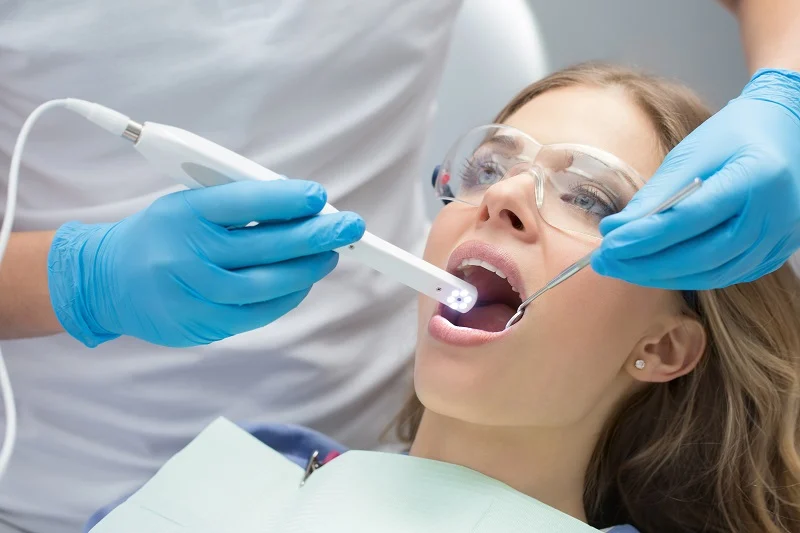
Your screening is quick, comfortable, and requires no special preparation. Your dentist will look closely at your lips, gums, cheeks, tongue, the roof and floor of your mouth, and the back of your throat, checking for color changes, sores, or unusual tissue. We will also gently feel your jaw, neck, and the area under your chin for lumps or swelling. The whole exam usually takes just a few minutes.
If we see anything that needs a closer look, we will explain what we found and talk with you about next steps. That might mean a follow-up visit to see whether the area heals or a referral to a specialist for further testing. Finding something unusual does not mean you have cancer. Most suspicious spots turn out to be harmless, but checking is always the right call.
Protecting Your Oral Health Between Visits
Screenings work best alongside healthy daily habits and a strong preventative dentistry routine. To lower your risk and catch changes early:
- Avoid all tobacco products and limit alcohol
- Use a lip balm with SPF when you are outdoors
- Eat a balanced diet rich in fruits and vegetables
- Check your mouth once a month in a well-lit mirror, looking for new spots, sores, or lumps
- Keep up with regular checkups so changes can be compared over time
If you notice something unusual between appointments, don't wait for your next cleaning. Call (973) 667-9110 and we will make time to take a look.
Oral Cancer Screening FAQs
How often should I have an oral cancer screening?
Most adults should be screened at each routine dental checkup, usually every six months. If you have higher risk factors such as tobacco use, your dentist may recommend closer monitoring.
Does an oral cancer screening hurt?
No. The screening is a painless visual and physical exam. Your dentist simply looks at the tissues of your mouth and gently feels your jaw and neck for any lumps or swelling.
How long does the screening take?
The exam takes only a few minutes and is typically done during your regular checkup, so it does not require a separate appointment.
What happens if you find something suspicious?
We will explain what we see and recommend next steps. This may include a follow-up visit to check whether the area has healed or a referral to a specialist for a biopsy or further testing. Most suspicious areas turn out to be harmless.
I don't smoke or drink. Do I still need a screening?
Yes. Oral cancer can develop in people with no known risk factors, and HPV-related cases are found in nonsmokers as well. Regular screening is recommended for every adult.
Can I check my own mouth for signs of oral cancer?
Yes. A monthly self-check in a well-lit mirror can help you spot new sores, patches, or lumps. Look at your lips, gums, cheeks, tongue, and the roof and floor of your mouth, and call us if anything doesn't heal within two weeks.
Is an oral cancer screening covered by dental insurance?
Screenings are usually performed as part of a routine exam, which most dental plans cover. Our team is happy to help you understand your benefits before your visit.
Schedule Your Screening Today
A few minutes in the dental chair can help protect your long-term health. Schedule your next checkup and oral cancer screening with Joshua Stern D.D.S in Nutley, NJ , or call us at (973) 667-9110 if you've noticed a change in your mouth.